

Do you enjoy the content ? DONATE with PayPal to support me !
Introduction
(tr)uSDX QRP Transceiver, a 5W HF multimode transceiver. The small size makes it excellent for portable work. A tiny but mighty five bands transceiver. After receiving my amateur radio license I realized that I have no transceiver. Here is where my friend Andrei – YO6TJJ came to the rescue. He sent me one of the best presents after I got my license in 2022, a (tr)uSDX QRP transceiver that allowed me to finally get on air. Here we are four years later, making a review. Even if it’s been a while and meanwhile new QRP rigs appeared on the marked, in my personal opinion I think this is still the best budget QRP rig in 2026. I know it’s not perfect and we will discuss that, but it does a lot for what you pay, plus that the size makes it great for portable ( POTA, SOTA, etc. ).
The video I made it’s a bit old and it was filmed for the older review article I used to have on the older blog. Since now I am writing this article from scratch, clearly I will have more detailed info in the article. Plus that I was still doing my first steps in amateur radio back then, so I have way more knowledge at this point that allows me to see things differently. The transceiver it’s still the same.
(tr)uSDX Transceiver Features
The transceiver I have was actually produced by roWaves at that time. Unfortunately they no longer sell this QRP multiband transceiver. If you would like to purchase one, check an authorized seller by Manuel – DL2MAN. The newest firmware has a few improvements comparing to the one I use. One of the advantages is that you can do digital modes by only using the USB cable, no need for audio cables. Because I also use the CAT control for other things, I prefer using an older firmware and audio cables for the digital modes.
- Current firmware version 3b;
- Available in various versions. Mine it’s 80m, 60m, 40m, 30m and 20m
- Power output 5W ( see details in the article );
- CAT interface;
- Modes in my firmware: CW, USB, LSB, AM, FM;
- RIT control;
- VFO-A and VFO-B;
- AGC control ( on and off );
- NR noise reduction;
- ATT attenuator;
- CW decoder;
- Semi QSK;
- Keyer speed settings;
- Keyer mode settings;
- Keyer swap;
- VOX control;
- CQ interval settings;
- Programable CQ message.
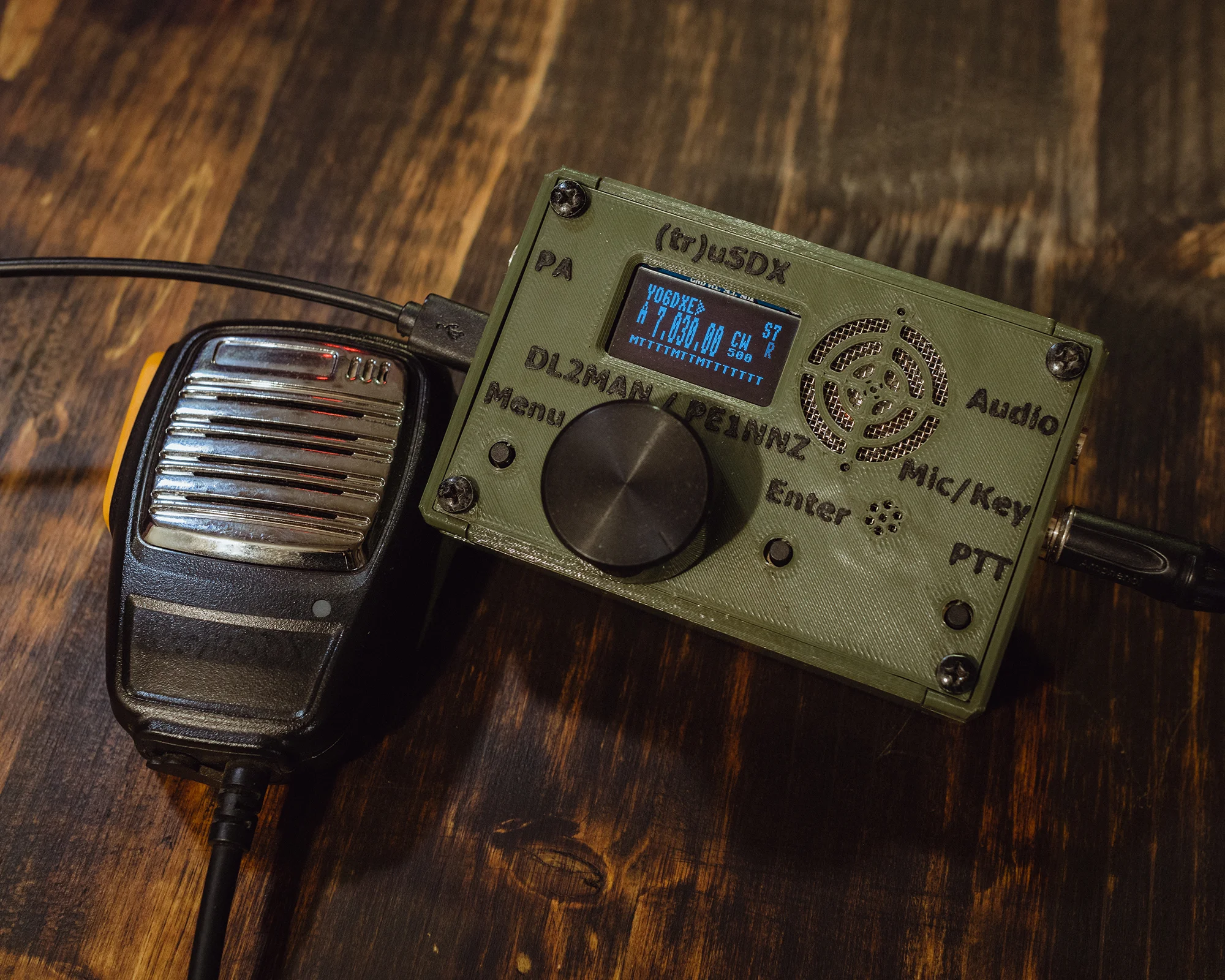
5W truSDX QRP Transceiver
First Impressions On The (tr)uSDX
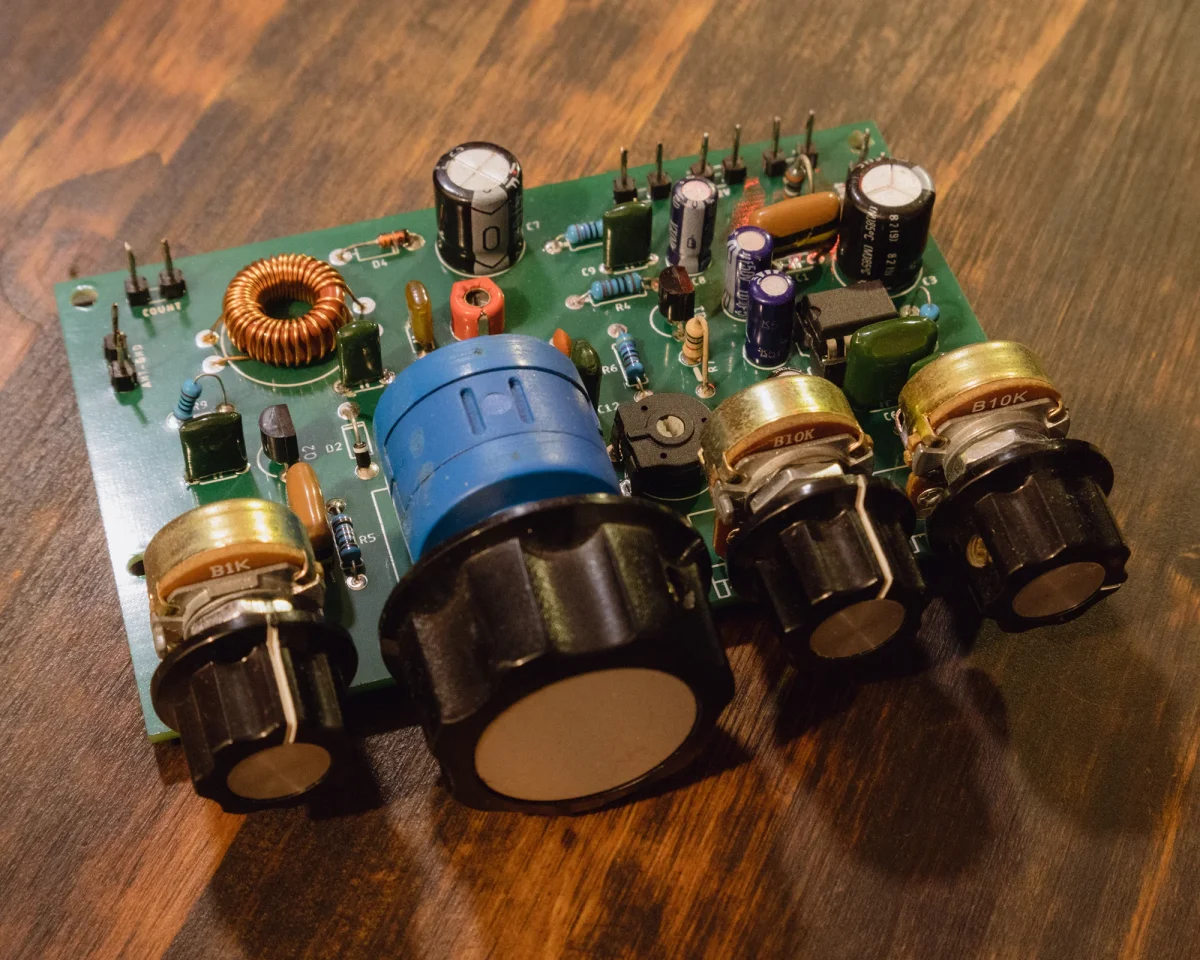
I was thinking a lot back then to order the PCB boards and the components to build one. The only thing that made me postpone my decision, was the lack of equipment I had to fine tune it. That made me realize that I will not be able to bring it up to the specs and get the best out of it.
I decided that the best for me would be to order one that is already adjusted and properly tested. It seems that Andrei could read my thoughts, because I woke up with the delivery man in front of the house with an unexpected package. And what a pleasant surprise that was. Here is the package and the original (tr)uSDX transceiver as it used to be. I made little changes meanwhile.
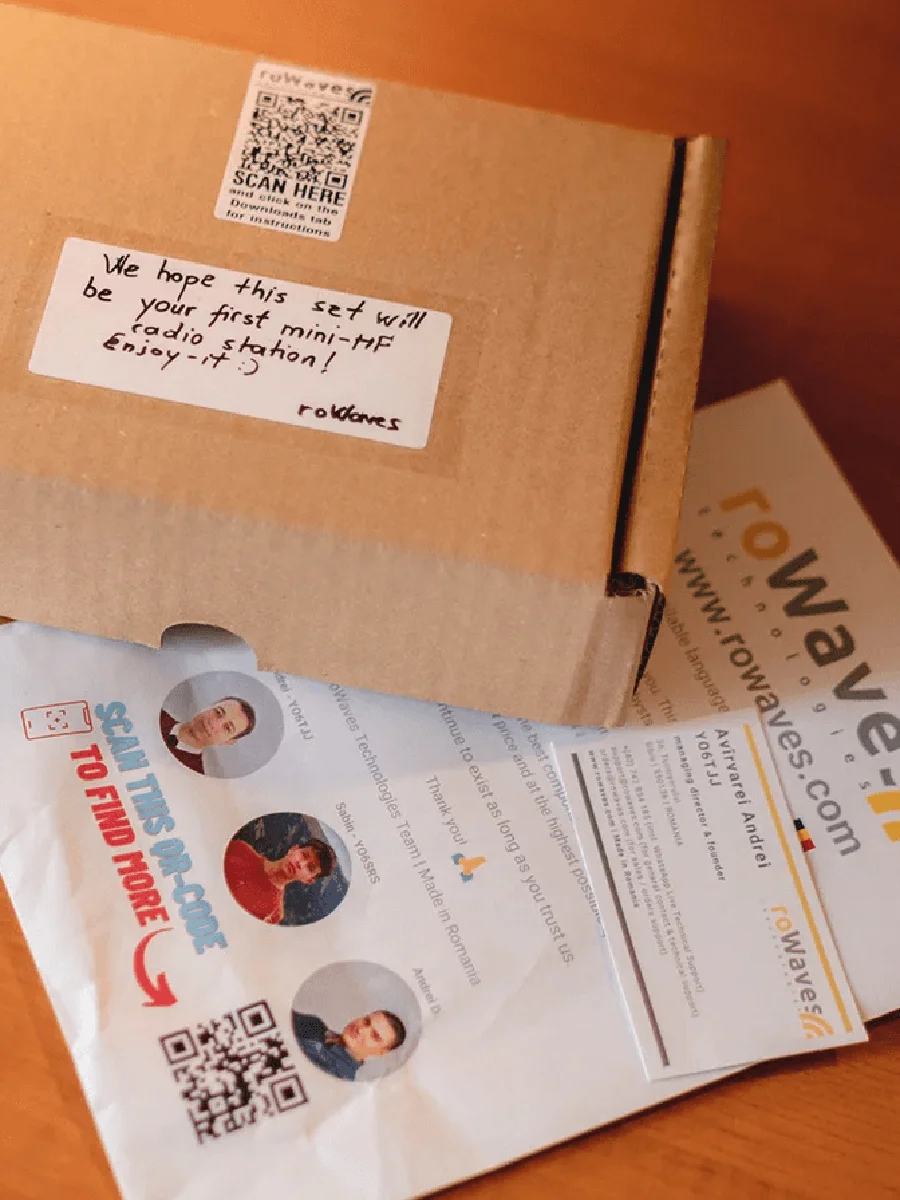
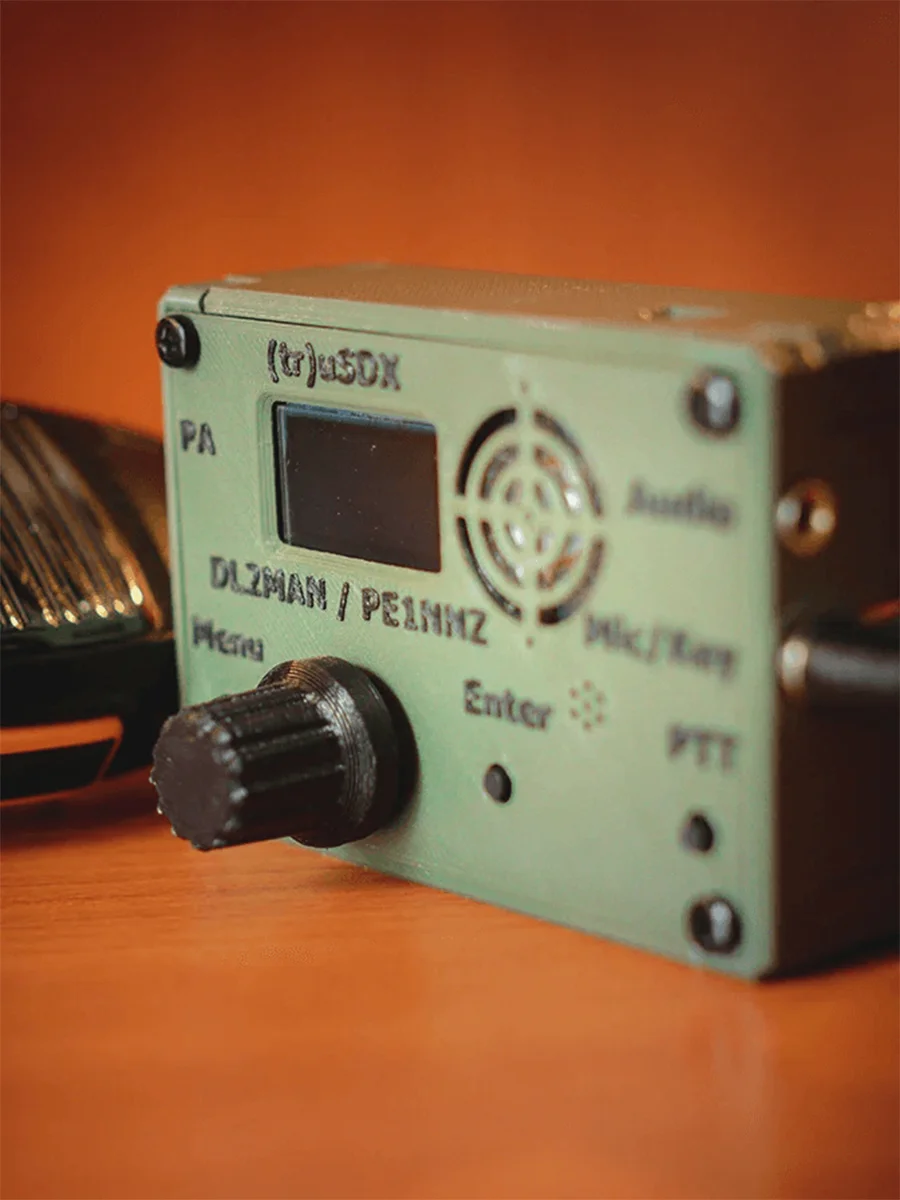
The Package From roWaves
In the video I was talking mostly about my opinions on this little transceiver. The best part of the (tr)uSDX is that it has five HF bands available. If you like QRP and portable work this is the perfect choice so far. I usually don’t like any digital amateur radio equipment. I did followed all the work and development of the (tr)uSDX transceiver on Manuel’s YouTube channel.
It has been a lot of hard work behind done by Manuel and Guido. For a beginner in amateur radio, this little QRP transceiver is just perfect. I would also recommend you to read the Users Manual. Many of the questions people usually ask, have answers in the manual.
Power Output And Harmonics Suppression
The power output may vary depending on the band, but also on the manufacturer and how well the transceiver was adjusted. Down bellow I will leave the technical details on power output and efficiency for each band. Of course these are specific to the transceiver I have. But in general they should be about the same or at least close, for any of the (tr)uSDX transceivers out there.
DATA OF THE TRANSCEIVER RECEIVED FROM ROWAVES
| PA EFFICIENCY @ 12V | POWER - W |
|---|---|
|
80m – 76.6% |
5.06 |
|
60m – 74.3% |
5.71 |
|
40m – 75.8% |
6.2 |
|
30m – 74% |
6.48 |
|
20m – 76.2% |
5.78 |
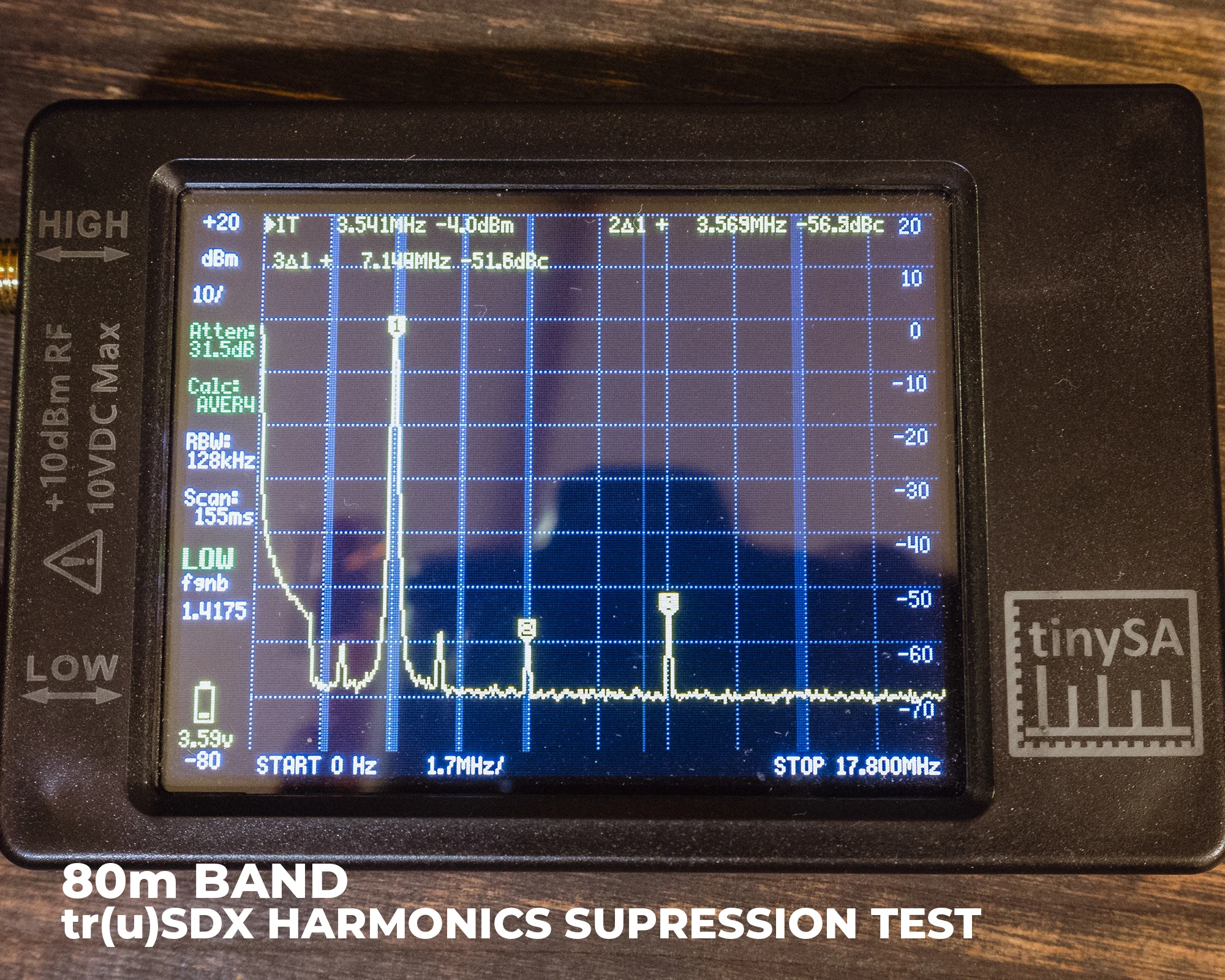
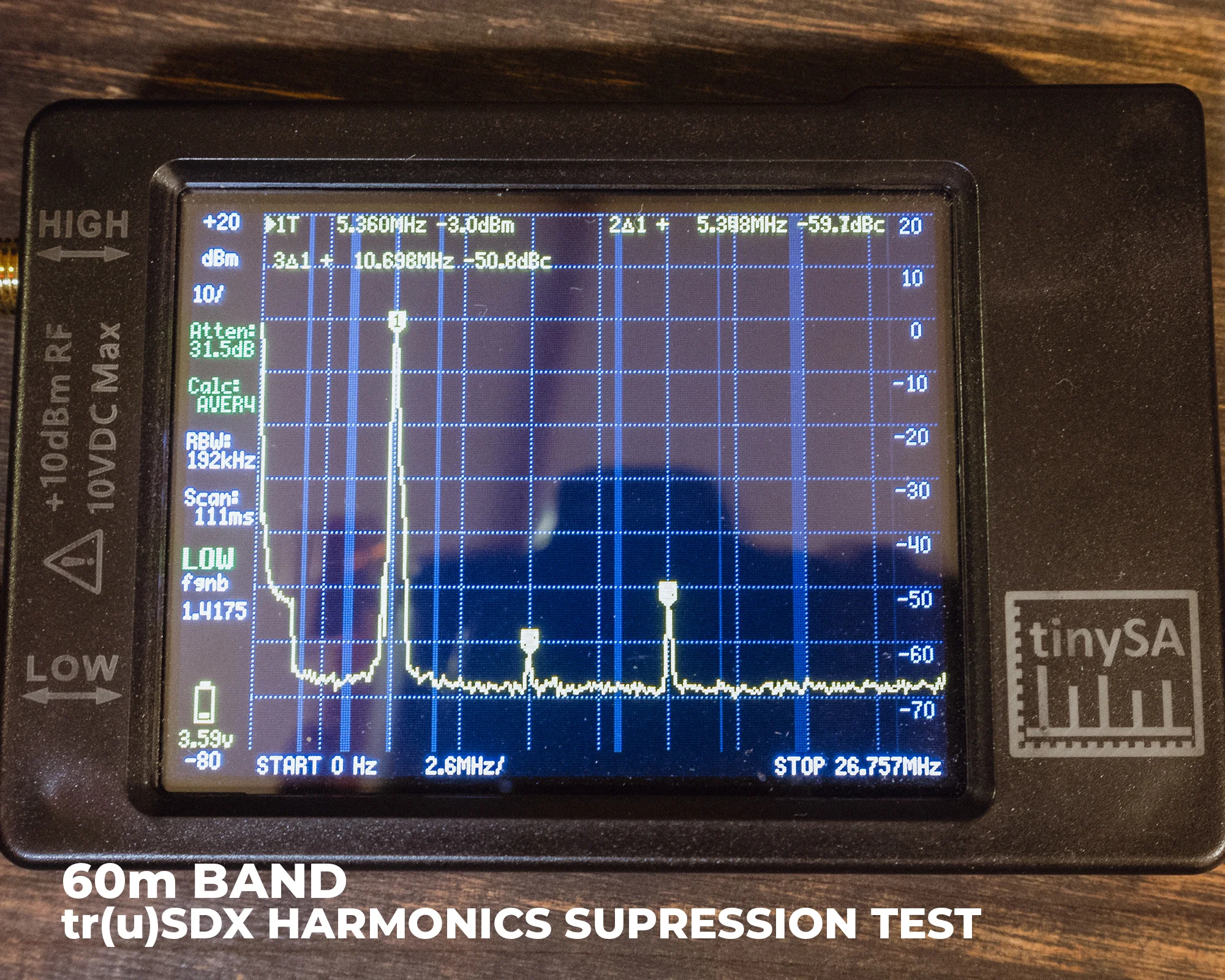
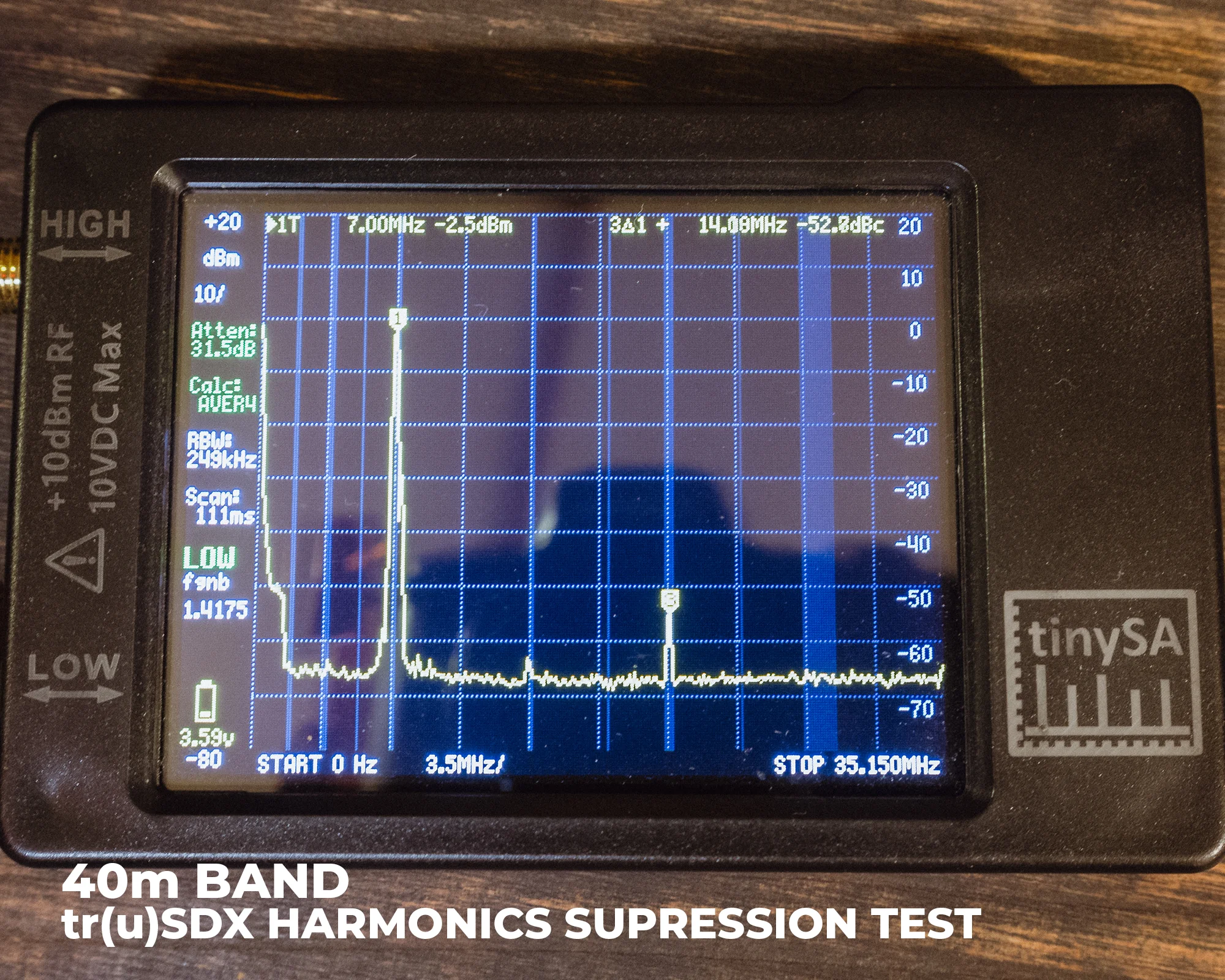
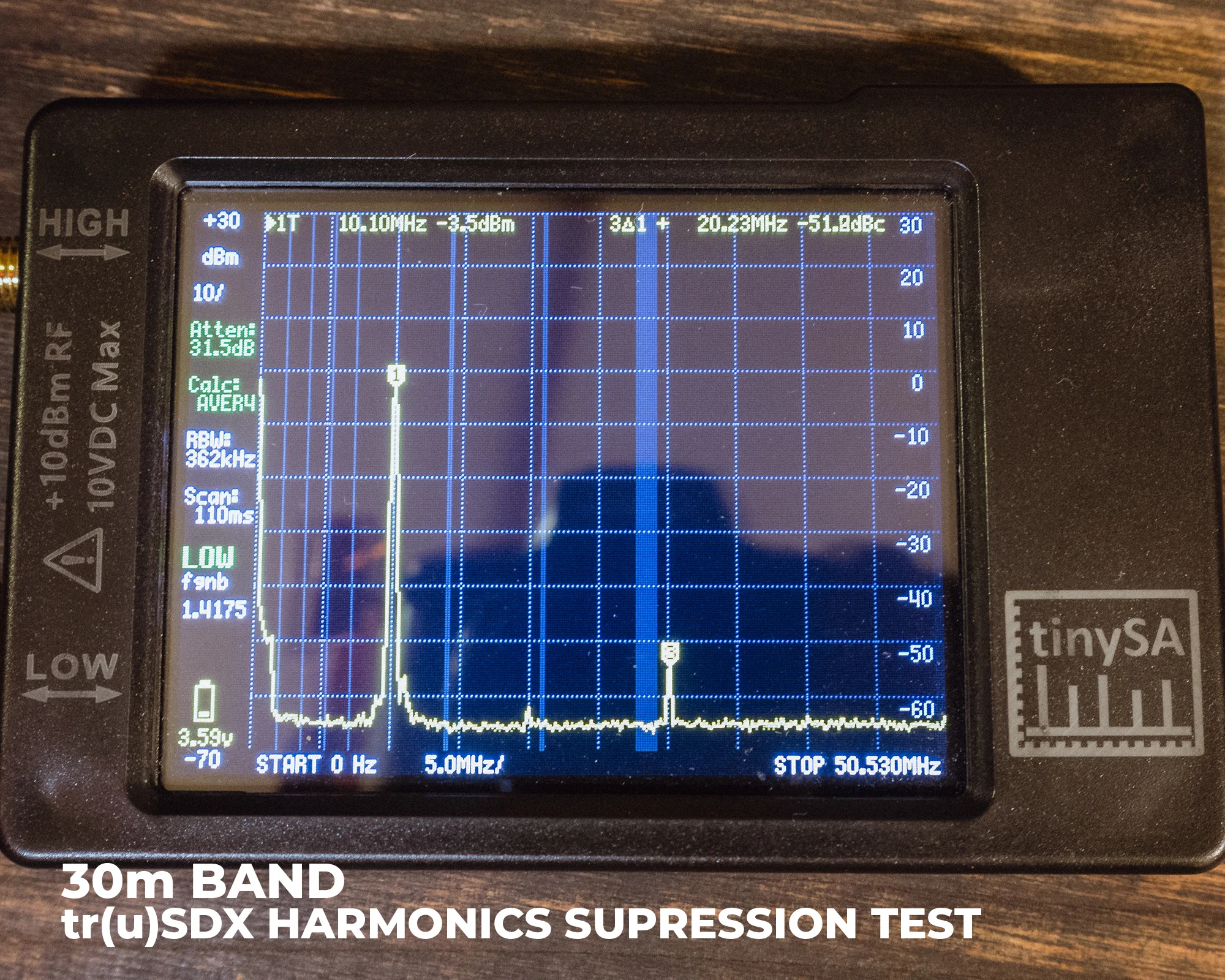
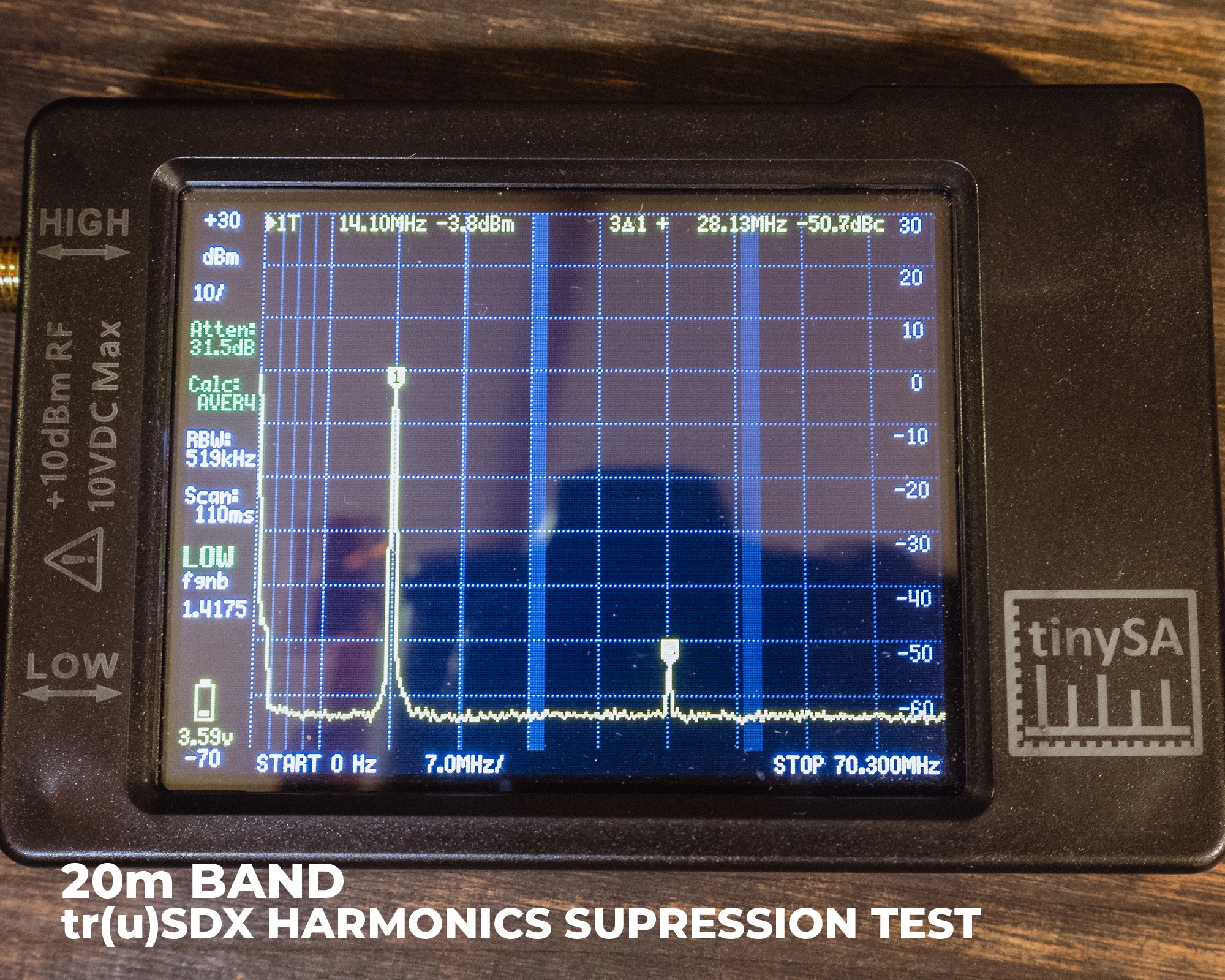
(tr)uSDX Harmonics Suppression Test
Speaker Output / Audio Quality
Many people that didn’t follow the development of the (tr)uSDX complained about the speaker output. The transceiver did not had that speaker at first. The one that comes now with the transceiver, it’s nothing but an emergency speaker that was added in the last minute. It’s not excellent, but is better than having no audio at all. If you don’t raise the volume over 11, you should have decent audio with no issues. If you ever go out for portable work and you forget your headphones or the amplified speaker, you will end up loving that little speaker. I sure know what I’m talking about as I do that quite often. Of course I am not very pleased either, so I usually either use it with headphones, or connected to an external amplified speaker.
Because I used it a lot out in the wild, many times I had little bugs or flies entering the speaker. To prevent that from happening I added a metallic grill over the speaker and the microphone. That solved my problem and now I have no issues with this. Just make sure it will not touch the speaker.
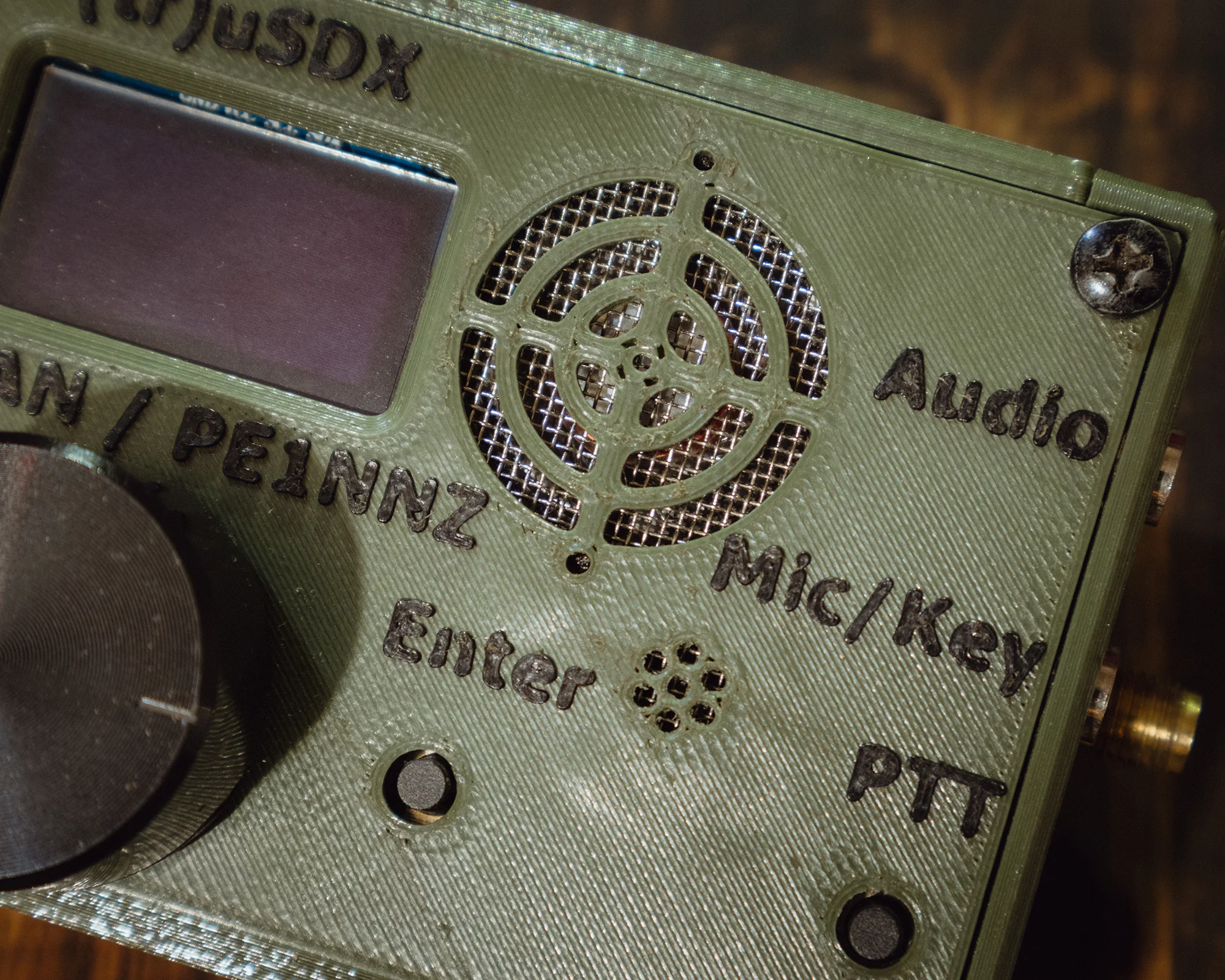
(tr)uSDX Transceiver Speaker Protection
Other Modifications
One thing I wish it was available, it’s the USB connector. These days it seems to be a standard for devices and mobile phones to use USB-C. For that reason sometimes in local stores it’s hard to find other cables. I honesty had a hard time getting the right cable for the transceiver so I could connect it to the computer for CAT control. So I really wish it had a USB-C instead of the one used.
A personal preference was the power connector. This transceiver was the only one I had using a smaller power connector. All the gear I use has the 5.5mm connectors. So I modified it ( not in the prettiest way ) and replaced the original power connector with a 5.5mm version. It was not easy but I did managed to fit it inside. I promised this photo to my YouTube friend @ TerminalElement but I never had the chance to email it to him. So I hope he gets to see it now in the blog article ( hi ).
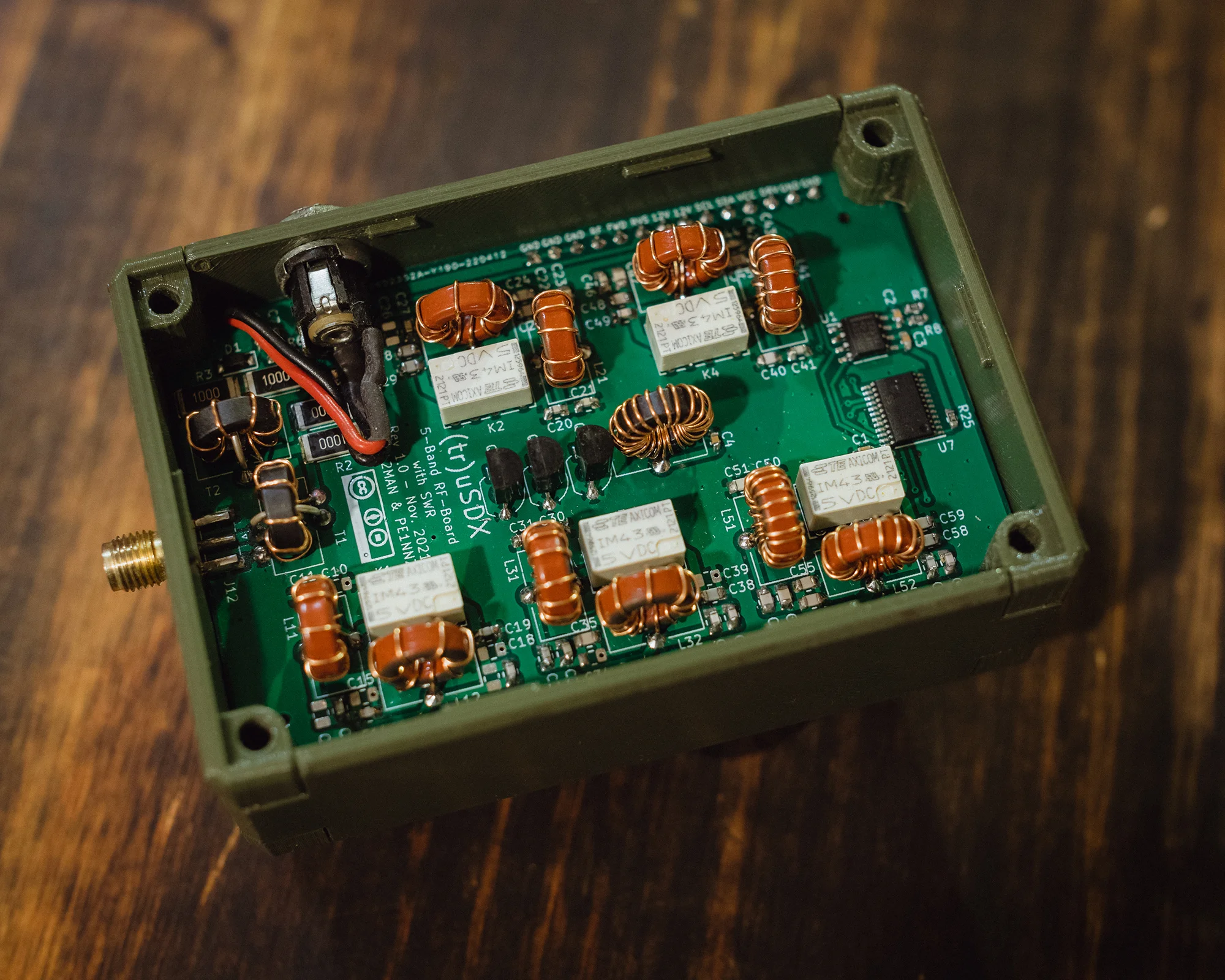
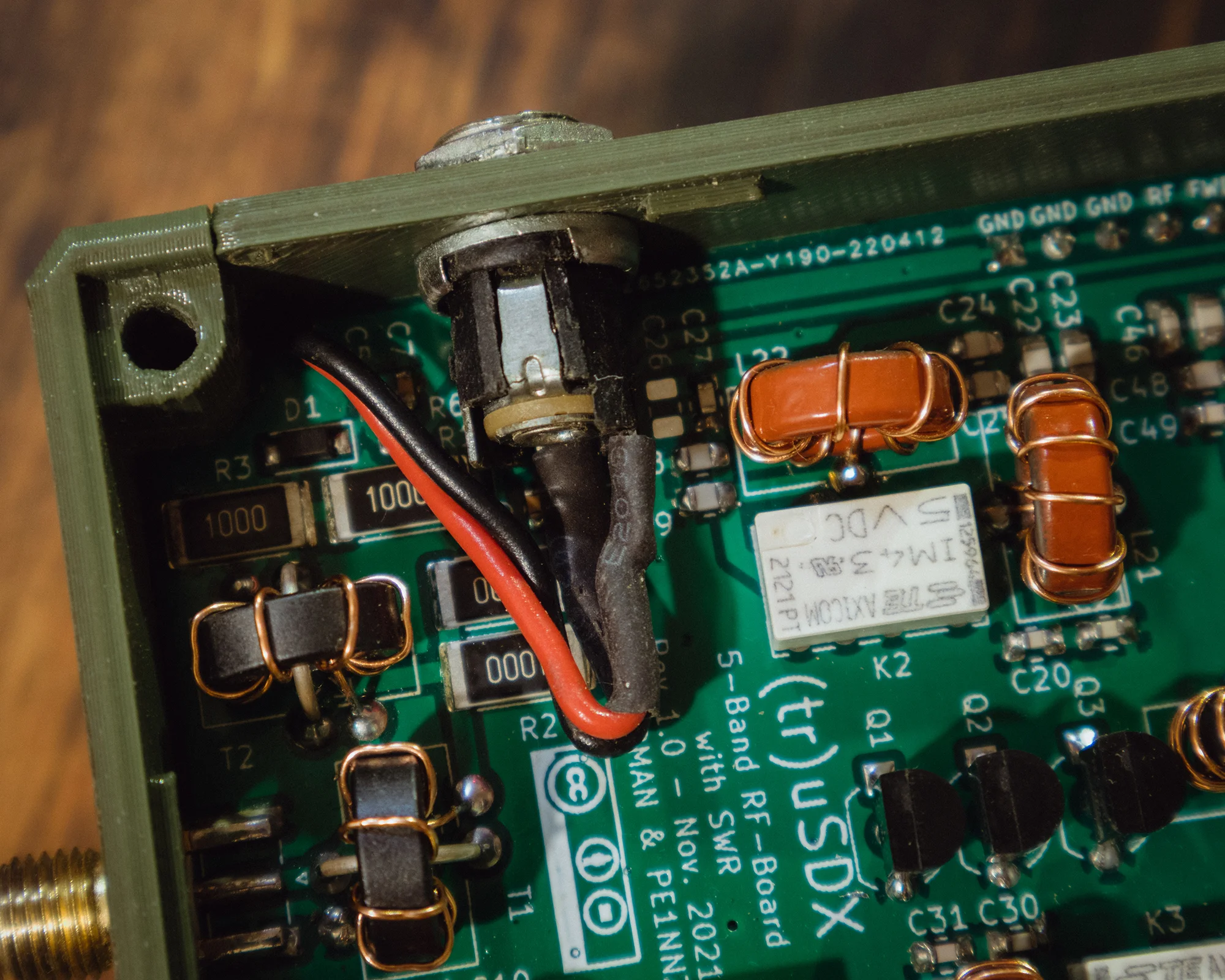
(tr)uSDX RF Board And Power Connector Modification
Besides replacing the front knob and the changes I already mentioned, I did nothing else to the transceiver. Except building the audio cables for the digital modes. I am not much into FT8 but I did had a little fun late at night when I had to keep the room quiet. It’s not bad but it makes me feel like I am talking on messenger, not really making a QSO. But when there is not much else to do, or bad propagation… something it’s always better than nothing right ?
I do use it with Vara HF and Winlink to read emails if I am in some isolated place where I have no internet connection. Like I was two years ago up at the Cioclovina Scout Center for example. I don’t do many videos like this. I think I should because I am enjoying it, but here you have two videos with the transceiver in action from home. You will see it in portable as well in another article.
Final Thoughts
I’m writing this part, four years later after receiving the transceiver and I will say that I am more than happy with it. In the meantime I received other transceivers that we will talk about in other articles, so the (tr)uSDX it’s no longer my main or my only transceiver. I still use it now and then, especially if portable. The size and weight are perfect for portable. It’s great fun in SSB, CW or digital modes. It connects really nice and communicates with most amateur radio software via CAT control.
Sadly I still didn’t had the free time to learn the Morse code so far. But making tests in CW I did realized how much fun that is. If you are looking for a cheap portable transceiver, I would really recommend it, even in 2026. It’s not perfect whatsoever, but even with a few limitations that it has, it’s an excellent transceiver especially for beginners. Have a look at my logbook, as nearly 98% of the QSO’s until late 2025 are all made using the (tr)uSX transceiver.
73 DE YO6DXE

I was hoping to purchase a QMX unit, but now that I live in Spain, I am NOT prepared to pay tons of import duty or risk it going missing …as with other equipment from the UK. Therefore, I have turned my attention to the tr usdx unit, which I am hoping to obtain once I have found a trustworthy seller. Thank you for your information.
73
Dave
Hi David. Yes I agree with you on this. On the tr(u)SDX you can try this seller as Manuel recommends this one as his official one so clearly is on the trusted list.
73, YO6DXE